project description: develop an intervention with physical touchpoints to mitigate a systemic material waste problem.
project description: develop an intervention with physical touchpoints to mitigate a systemic material waste problem.
Elizabeth Price
engineer | designer |

dreamspace
a system of science-backed sleep products for preschool-age children
independent design engineering project | MDE - Harvard GSD
project goal: develop a solution aimed at childhood sleep problems that encourages bedtime consistency and self-soothing practices through the integration of age-appropriate and scientifically proven techniques to induce relaxation and sleep at bedtime
contribution: scientific, market, & user research; technical product design; physical prototyping
team member: Cate Tompkins
learning outcomes: product refinement, stakeholder engagement, experience design
tools & processes: adobe after effects, illustrator, photoshop, figma, solidworks
background and motivation
-
Sleep is one of the most underrated tools for good health despite its relative accessibility
-
Young children with behavioral insomnia or nightmares often resist bedtime (up to 50% of 3-5yo children), have difficulty falling asleep, and wake frequently in the night, which can add more stress to already stretched thin & overtired caregivers.
-
Current offerings lack accessibility and personalization options
process
-
Research: academic, stakeholder & market review
-
Mapping: understanding the user journey and the nature of sleep cycles
-
Defining the problem
-
Prototyping: form, function, materials, elements, etc.
-
Product/prototype and technology assessments
-
Product testing and refinement
solution
DreamSpace provides parents with a sleep solution that encourages bedtime consistency and self-soothing practices through the integration of age-appropriate and scientifically proven techniques to induce relaxation and sleep at bedtime.
DreamSpace is a system of sleep products for preschool aged children that consists of a therapeutic night light, a companion app for parents, and a multi-sensory, educational bedtime story.

defining the problem
common childhood sleep disorders
behavioral Insomnia
Prevalent in 10-30% of children (ages 0 to 12 years).
Behavioral insomnia is characterized by difficulty initiating or maintaining sleep, and is divided into two types: sleep-onset association & limit-setting.
Nightmares
~50% of children between the ages of 3 and 6 report frequent nightmares.
Nightmares are the most prevalent of parasomnia disorders and are characterized by unpleasant dreams and increased sympathetic (heart and respiratory) response.
source: Carter et al. 2014
sleep deprivation effects in caregivers

slowness or inhibited mental processes
interfere with ability to manage emotions
reduces abilityy to stay calm when confronted with negative stimuli
interfere with caregivers' ability to express joy
levels of sleep impact

the problem:
Young children with behavioral insomnia or nightmares often resist bedtime, have difficulty falling asleep, and wake frequently in the night, which can add more stress to already stressed out, stretched thin & overtired caregivers.
focus group: conversation on sleep
Existing conditions, challenges and solutions surrounding caregiver sleep


Existing solutions to child slep challenges

none
restrict technology
parent stays in room
sleep in parents' bed
medication
sleep study
self soothe


Review of the literature through PubMed key search terms
Analyzed Facebook groups and Reddit threads for single parents
HMS/BWH Sleep Scientist, Boston Children’s Hospital physician, Harvard Center on the Developing Child Director, Children’s Book Author, SleepScore Venture Investors, MGH IHP Pediatric Occupational Therapist, Harvard iLab Experts in Residence, Developmental Learning & Mindfulness Specialist
Led a community conversation with 34 participants from under-resourced Boston neighborhoods (Roxbury, Dorchester, Mattapan, and East Boston) on sleep hygiene challenges and remediation techniques
9 IRB-approved interviews with families in under-resourced Boston neighborhoods, 9 additional interviews with higher income families
literature review
online forum studies
expert stakeholder
interviews
community conversation
customer interviews
hypothesis:
By providing caregivers of young children a calming and accessible product that reduces the struggles of pediatric behavioral insomnia and the impact of nightmare disturbances, we can improve the bedtime experience, reduce sleep onset time, and improve quality of sleep; therefore improving overall familial wellbeing.
developing the product
the design future
a smarter society
In 2050, we predict that the future of American lifestyle will rely on technology even more heavily than it does now. Technology will be the foundation of all aspects of life, and continuous innovation will be the solution to all of society’s problems. More specifically, we'll see a fast transition of technology into the home, bringing the budding idea of a smart house to fruition.


heightened senses
From the days of Hippocratic 'bedside medicine' to the arrival of the CAT scann, doctors have always relied on their senses in diagnosing and treating disease. To better understand the changing landscape of medical diagnostic capabilities, we researched the existing and emerging methods and technology in hopes of setting the stage for our intervention
the changing landscape
“The physician of the future is going to be...making decisions with so many data points that they cannot make the best decisions without computer-assisted support” - H. Jacobson, VUMC
Medical technology, diagnostic tools, and the future of healthcare delivery are drastically and radically changing, and it's almost certain that it will completely reinvent the current care-delivery model.

research & analysis

current user journey
we decided to conduct user journey research on the current experience of going to see a physician so we could understand potential painpoints for the patient and figure out where waste was being produced during the process.
weight (g)
22.5
28
5.8
50
58.25
Total = 165 g or 0.37 lb / patient
description
5 pages of check-in form
gloves, exam table paper, plastic thermometer cover
1 lab test/immunization & extra gloves per 4 people
gloves
12 pages of check-out paper
estimates of primary care waste

hypothesis
by providing in-home preventative care & around-the-clock monitoring of one’s well being, the number of visits to doctors’ offices and hospitals can be drastically reduced, in turn, reducing the amount of medical waste produced.

our intervention
the system

the user interface

user research
user input
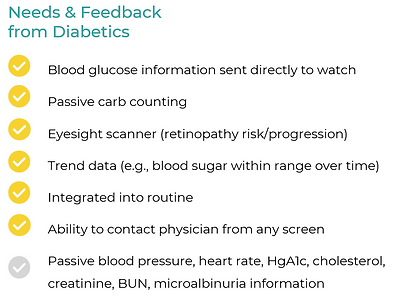
before committing to a specific direction, we interviewed potential users to gain more insight into what some of the primary features of our system should be


use case
while hive has the potential to benefit many different types of users, we decided to narrow in on people living with chronic illnesses - specifically those living with Type II diabetes. We made this decision for the following reasons:
-
almost 10% of the US population has diabetes
-
diabetics are used to home healthcare & intimately monitoring their own health
-
diabetics have an increased risk of heart disease, kidney disease, stroke, neuropathy, retinopathy, infections & amputations
-
diabetics typically visit physician offices 5-9 times per year
design and development

idea progression
the scope of our system underwent a variety of different versions as we narrowed in on the main priorities of our product. While the idea of an all-encompassing home healthcare system that nearly obsolesces medical professionals may not be as ludicrous as it once was, it's not yet, nor soon to be, considered paramount to providing patients with the best possible healthcare solutions. Furthermore, it would require a drastic systemic transformation in more than just the medical industry which would result enormous societal implications.
interface iteration
Since the interface of this system is the centerpiece of our product, we worked to optimize and streamline the information flow of hive while keeping the needs of the users at the forefront of our decision-making process

designing the experience


introducing dreamspace
the design future
a smarter society
In 2050, we predict that the future of American lifestyle will rely on technology even more heavily than it does now. Technology will be the foundation of all aspects of life, and continuous innovation will be the solution to all of society’s problems. More specifically, we'll see a fast transition of technology into the home, bringing the budding idea of a smart house to fruition.
heightened senses
From the days of Hippocratic 'bedside medicine' to the arrival of the CAT scann, doctors have always relied on their senses in diagnosing and treating disease. To better understand the changing landscape of medical diagnostic capabilities, we researched the existing and emerging methods and technology in hopes of setting the stage for our intervention
the changing landscape
“The physician of the future is going to be...making decisions with so many data points that they cannot make the best decisions without computer-assisted support” - H. Jacobson, VUMC
Medical technology, diagnostic tools, and the future of healthcare delivery are drastically and radically changing, and it's almost certain that it will completely reinvent the current care-delivery model.
research & analysis
current user journey
we decided to conduct user journey research on the current experience of going to see a physician so we could understand potential painpoints for the patient and figure out where waste was being produced during the process.
weight (g)
22.5
28
5.8
50
58.25
Total = 165 g or 0.37 lb / patient
description
5 pages of check-in form
gloves, exam table paper, plastic thermometer cover
1 lab test/immunization & extra gloves per 4 people
gloves
12 pages of check-out paper
estimates of primary care waste
hypothesis
by providing in-home preventative care & around-the-clock monitoring of one’s well being, the number of visits to doctors’ offices and hospitals can be drastically reduced, in turn, reducing the amount of medical waste produced.
our intervention
the system
the user interface
user research
user input
before committing to a specific direction, we interviewed potential users to gain more insight into what some of the primary features of our system should be
use case
while hive has the potential to benefit many different types of users, we decided to narrow in on people living with chronic illnesses - specifically those living with Type II diabetes. We made this decision for the following reasons:
-
almost 10% of the US population has diabetes
-
diabetics are used to home healthcare & intimately monitoring their own health
-
diabetics have an increased risk of heart disease, kidney disease, stroke, neuropathy, retinopathy, infections & amputations
-
diabetics typically visit physician offices 5-9 times per year
design and development
idea progression
the scope of our system underwent a variety of different versions as we narrowed in on the main priorities of our product. While the idea of an all-encompassing home healthcare system that nearly obsolesces medical professionals may not be as ludicrous as it once was, it's not yet, nor soon to be, considered paramount to providing patients with the best possible healthcare solutions. Furthermore, it would require a drastic systemic transformation in more than just the medical industry which would result enormous societal implications.
interface iteration
Since the interface of this system is the centerpiece of our product, we worked to optimize and streamline the information flow of hive while keeping the needs of the users at the forefront of our decision-making process
designing the experience


